FRI’s FRESH seminar series continue through November! Sign up to attend these free seminars at the links below.
- Andrew Maust (University of Arkansas) will discuss “Demystifying the buzz around non-alcoholic beer: Exploring the pathogenic, spoilage, and regulatory risks around this emerging beverage class” at 10:30 a.m. CT on Oct. 13.
|
|
|
|
- Christopher Gisriel (UW-Madison) will present “Growing Cyanobacteria on the moon and Mars” at 11 a.m. CT on Nov. 19.
|
|
|
|
Four FRI faculty (executive committee member Jeff Sindelar and affiliate members Steve Ricke, Vanessa Leone, and Sara Gragg) are coauthors of a new report investigating whether liver abscesses in beef (semen) x dairy (cow) crossbred animals are associated with Salmonella
in lymph nodes. Since the offspring calves are better for beef production, such crossbreeding improves profits for dairy farms, making beef x dairy crossbreeding increasingly popular. In cattle, Salmonella has been found in liver abscesses, where it may translocate to lymph nodes to potentially contaminate ground beef.
|
|
|
|
Beef x dairy crosses have higher prevalence rates of liver abscesses (40-60%) compared to beef cattle (~20%), likely because of dietary differences. As a result, it is important to know if the increased rate of liver abscesses in beef x diary animals is associated with an increased prevalence of Salmonella in the lymph nodes of such animals. This study found a similar Salmonella
prevalence in carcasses from animals with or without liver abscesses (~20%). Furthermore, beef x diary carcasses (n=124) with liver abscesses were no more likely than those without liver abscesses (n=124) to have Salmonella in one or more lymph nodes.
|
|
|
|
FRI executive committee member Nancy Keller recently published a retrospective article describing the pathway of her distinguished scientific career
that has led her from the Peace Corps in Lesotho to graduate school at Cornell University, a postdoc at the USDA Southern Regional Research Center in New Orleans, and eventually to the University of Wisconsin-Madison where she is a world-class expert in fungal genetics and secondary metabolism.
|
|
|
|
Several new U.S. outbreaks have been reported in recent weeks:
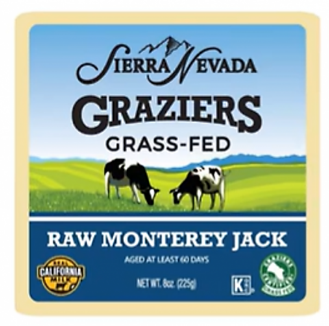
- A new outbreak of E. coli O26:H11 linked to Sierra Nevada Graziers raw milk cheeses has sickened at least 13 individuals in nine states, with at least eight requiring hospitalization and three with hemolytic uremic syndrome. The company
has recalled its Monterey Jack, Jalapeno Jack, Medium Cheddar, and Sharp Cheddar raw milk cheeses.
|
|
|
|
- A new outbreak of E. coli O157:H7 has been reported by both USDA-FSIS and
FDA. At least 38 sicknesses have been reported. No food product has yet been officially linked to this outbreak, but some sources
have hinted that the responsible food is a meat and vegetable sandwich wrap.
|
|
|
|
Two new Listeria monocytogenes outbreaks were also reported in late September and are listed as active by FDA. At least 44 individuals have been sickened in the first, while at least 11 people were identified in the second outbreak. No food source attribution has yet been made for either outbreak.
|
|
|
|
The two Salmonella-associated sprout outbreaks first reported in August and September are still reported as ongoing:
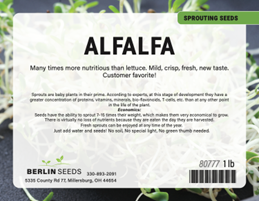
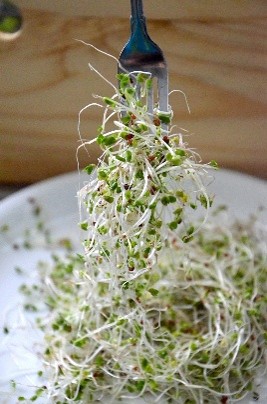
- The numbers of illnesses and hospitalizations in the outbreak linked to alfalfa sprouts marketed by Everything Sprouts, LLC, of Minneapolis involving multiple Shiga toxin-producing E. coli strains as well as Salmonella Agona
remain unchanged from last month (55 illnesses and four hospitalizations). Investigators believe that the seeds used to grow the sprouts were the source of the contamination that led to the outbreak. The implicated seed lot has been recalled by the packer, Berlin Seeds, who has also notified all sprout growers and wholesalers who received the recalled seed. Although the initial sprouts associated with the outbreak are no longer available in stores or restaurants, other sprouts produced from the recalled seed might still be available.
|
|
|
|
- A separate sprout-related outbreak, this one associated with Salmonella Bovismorbificans and linked to broccoli sprouts grown by Evergreen Fresh Sprouts, LLC, has now sickened 32
people in Washington, Montana, Idaho, Oregon, Minnesota, and Utah. Three hospitalizations but no deaths have been reported. State and FDA investigators identified a S. Bovismorbificans strain matching the outbreak strain in a retail grocery store and in a sample of remaining sprouts from one of the sick people.
- Three other Salmonella outbreaks are currently considered active in the U.S.
- A Salmonella Newport outbreak has now sickened at least 116 people, with no further details yet available.
|
|
|
|
- A Salmonella I 4,[5],12:i- outbreak is still liked as active, but the case count has not changed, and no responsible food item has yet been identified.
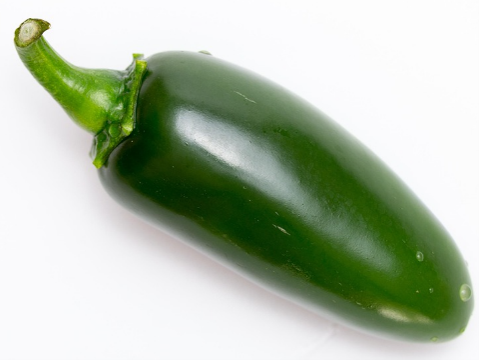
- Finally, the Salmonella Javiana outbreak associated with jalapeno peppers from Taylor Farms is also still underway, with 431 cases, 57 hospitalizations, and no deaths, but no recent updates have been provided.
|
|
|
|
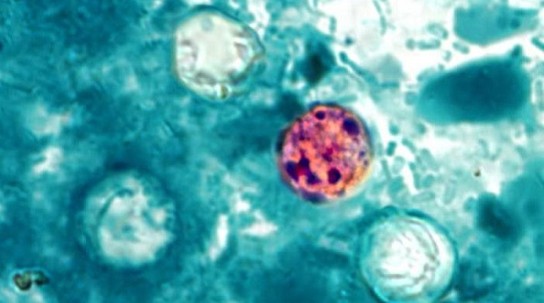
After a long and active summer, no multistate Cyclospora outbreaks are currently active in the U.S., although five investigations remain open. Only one of these outbreaks, the very large outbreak linked to iceberg lettuce from Taylor Farms, has been associated with a specific food item. The case count for that iceberg lettuce-associated outbreak is now at 12,883, with 570 hospitalizations and two deaths,
as confirmed by CDC/FDA.
|
|
|
|
|
|
Government & Regulatory News
|
|
|
|
California passed a new law that will allow voluntary labels to be used on foods that are accredited as “non-ultraprocessed” by certification agents beginning in June 2028.
- While a federal definition of “ultraprocessed” has been in discussion for years, with a proposed definition from FDA and USDA reportedly in “final review,” California jumped ahead and became the first state to
establish its own definition for “ultraprocessed” in 2025.
- California has implemented other food ingredient/safety laws ahead of federal efforts in recent years. You can read more here about Jesse Gabriel, the California Assembly member who introduced the bills involving ultraprocessed food definition and labeling and the banning of certain food dyes and additives to learn more why he has been leading this charge.
|
|
|
|
- Current FDA commissioner nominee Heidi Overton stated in her Senate hearing in late September that she believes that a “strong national standard” should be in place to preempt the growing patchwork of state food safety laws
and promote uniformity in regulation across the country.
|
|
|
|
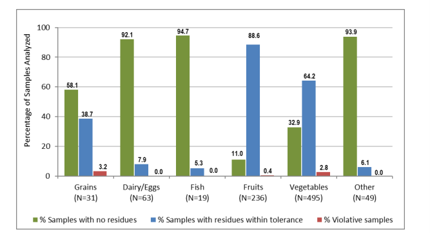
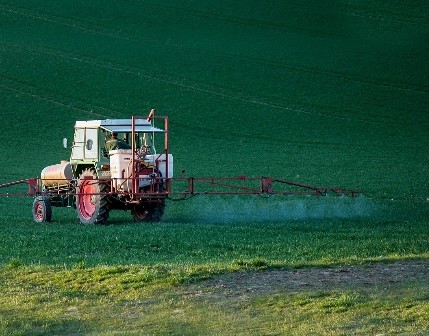
FDA released its FY2024 Pesticide Residue Monitoring Report this week. As in past years, most pesticide residues found in U.S. foods were below EPA tolerance limits.
- More than 3,500 human food samples were tested, most of which (~2,600) were imported foods from 76 countries. The large percentage of imported samples is a result of findings in previous years that pesticide residues were more of a problem in imported than in domestic produced foods.
|
|
|
|
- 98% of domestic samples and 84.4% of imported samples contained no residues exceeding EPA’s tolerance limits.
- Similar numbers of domestic and import food samples (36.8 and 36.5%, respectively) were found to have no pesticide residues at any measurable level.
|
|
|
|
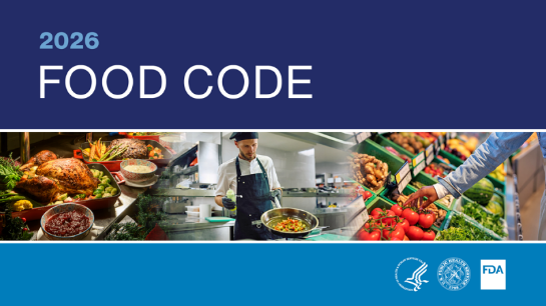
FDA released its 2026 edition of the FDA Food Code in September. The Food Code is a model code representing FDA's best advice for a uniform system to address the safety of food offered at retail and in food service.
|
|
|
|
- Topics that were updated in this edition include sanitizer temperatures, consumer advisories, revised food establishment definition, new mobile food establishment definition, allergen cross-contact clarification, food donations, specialty mushroom hazards, dehydration and freeze-drying guidance, waste receptacle requirements, vending machine controls, and updates to the food establishment inspection report form.
- For more commentary on the changes in the 2026 Food Code (including documentation for illnesses in employees, food defense guidance, wearing of jewelry while preparing food, and alternative cooling methods), read more here.
|
|
|
|
USDA FSIS announced it will be expanding environmental L. monocytogenes testing in RTE establishments across the U.S. starting in January. This testing will add two food contact surface and two non-food contact surface sampling tasks to all existing RTE post-lethality exposed product samples collected during routine RTE product sampling and is
not intended to replace a company’s own environmental monitoring.
|
|
|
|
|
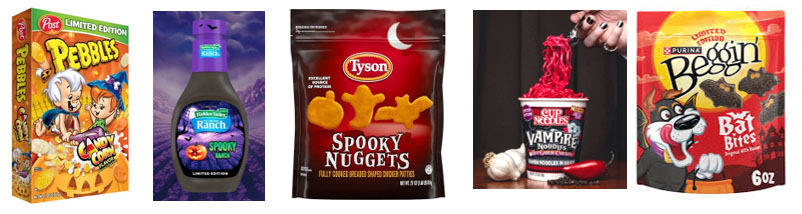
Is pumpkin spice passé? Food companies are breaking out of that rut and embracing other fall/Halloween flavors, shapes, and colors for seasonal novelty products. And in case you are curious: Natural colorings were used in the Spooky Ranch dressing (cocoa and fruit juice) and the Vampire Noodles (beet extract).
|
|
|
|
The DNA present in a unique trove of cheeses representing over 142 years production of a traditional Swiss mountain cheese (Raclette du Valais) at a single Alpine dairy has been mined to study microbial community dynamics within cheese.
Overall, the microbial diversity was found to decrease in cheeses made more recently compared those made in earlier years, with much of the cheese microbial community consisting of animal-and plant-associated bacteria when made in early years, while more specialized, domesticated, and standardized starter culture organisms dominated cheeses produced in more recent years.
|
|
|
|
Antimicrobial resistance genes were not found in organisms from cheeses made in the early years but were found in cheeses made when antibiotic use became common. Bacteriophage communities, however, have remained relatively stable in these cheeses and did not change much depending on when cheeses were made.
|
|
|
|
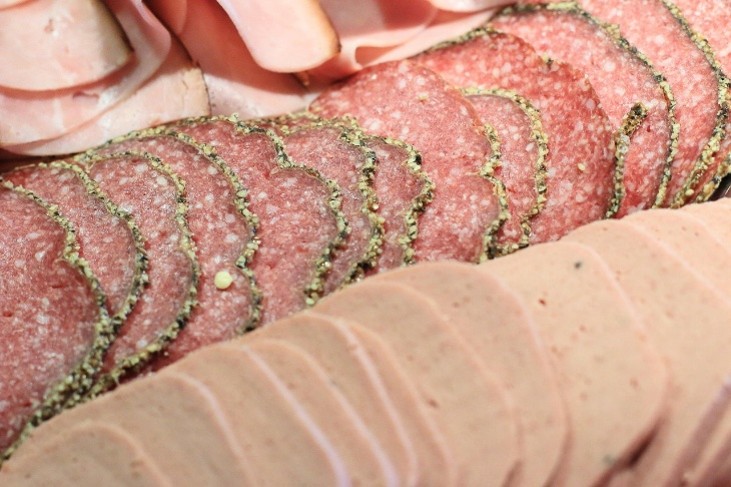
A new review article discusses ways to reduce or eliminate the use of synthetic to nitrite or nitrate in processed meats without compromising microbial safety, highlighting how the pathogen and matrix affect the ability to safely reduce nitrite (for example, L. monocytogenes is more tolerant to nitrite).
The pros and cons of various replacements for nitrite (starter/protective cultures, plant-based extracts, essential oils and phenolic compounds, organic acids and their salts, etc.), processing technologies (high-pressure processing, irradiation, cold plasma, etc.), and combinations of approaches are discussed.
|
|
|
|
Previous assessments of the hazards of using municipal wastewater to irrigate crops used for human foods have underestimated the risks associated with spore-forming Clostridia, especially Clostridioides difficile and Clostridium perfringens. A recent article discusses public health concerns and pathogenic potential
of these spores as well as their characteristics (ability to survive disinfection, persist indefinitely in soils, and harbor antibiotic resistance genes) that make them an underappreciated concern.
|
|
|
|
|
|
UW–Madison and Wisconsin News
|
|
|
|
The 2026 Wisconsin Science Festival will be held Oct. 15–25 at locations throughout the state. Originating in 2011, the festival is a statewide celebration of science, technology, engineering, art, and math with activities for people of all ages, backgrounds, and interests. Events include hands-on science exhibitions, demonstrations, performances, tours, pub nights, workshops and more.
|
|
|
|
Dairy manufacturers, processors, and suppliers are invited to sign up now for the next hybrid meeting of the Dairy Food Safety Alliance (a partnership between the Center for Dairy Research and the Wisconsin Cheese Makers Association) on Thursday, Oct. 29, from 10 a.m.–2 p.m. CT. The in-person option will be held in Madison, Wisc.
|
|
|
|
Upcoming training opportunities on the UW-Madison campus include the following:
|
|
|
|
Did this email land in your Spam folder? Add NoReply@explore.wisc.edu to your Contacts/Safe Senders List to help all FRI emails make it to your Inbox.
|
|
|
|
|